Loading...
Serving Buckeye, AZ and surrounding areas. (480) 791-2560
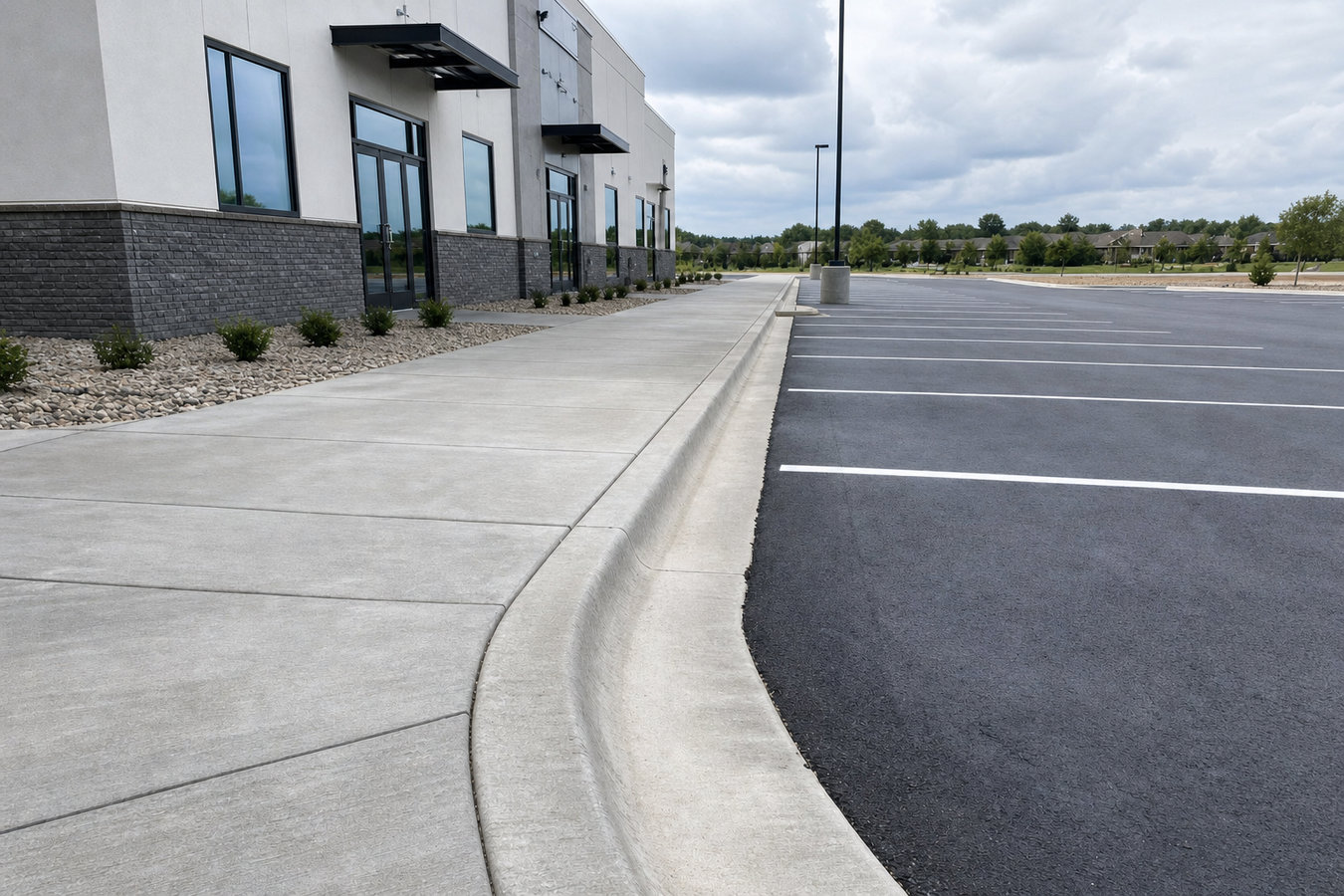
Ragged yard edges and cracked walkways let your whole property down. We form, pour, and finish concrete curbing and sidewalks that hold their shape through Buckeye summers and look sharp for years.
Concrete curbing and sidewalks in Buckeye involve setting forms, preparing the desert soil base, pouring the mix, and finishing the surface before it sets - most residential jobs take one to two days of active work, with additional curing time before use.
If your yard edges look unfinished or your front walkway has seen better days, fresh concrete is the fix that holds. Unlike mulch borders or paver edges that shift in Buckeye's sandy soil, poured concrete curbing stays put through dust storms and monsoon rains. If you are also planning to update your driveway approach, ask us about driveway paving at the same time - coordinating both projects saves mobilization costs.
Our crews know Buckeye's soil conditions and schedule pours early to beat the summer heat, so the finished concrete cures properly rather than drying too fast and weakening.
Mulch and gravel keep migrating onto the driveway no matter how many times you edge them back. The underlying problem is that there is no hard barrier holding things in place. Without curbing, every windstorm and Buckeye monsoon rain moves your landscaping around, costing you time and looking untidy year-round.
Sections that have shifted, heaved, or show surface scaling are a trip hazard and a visual eyesore. In Buckeye's heat, concrete that was not properly finished or jointed breaks down faster. A lifted section that catches a toe or collects standing water after a monsoon will only get worse without intervention.
You have put money into desert-friendly rock and plants, but the whole yard looks unfinished because there is nothing defining where the landscape ends and the hardscape begins. Concrete curbing is the finishing touch that ties the investment together and signals a well-planned yard to anyone who drives past.
Guests and family members stepping across loose gravel or uneven dirt in summer heat means more time exposed to ground temperatures that can be dangerously high in Buckeye. A direct concrete walkway from the driveway to the front door solves the safety and comfort issue in one pour.
We handle residential and commercial concrete curbing and sidewalk work from start to finish. That means measuring the site, preparing the ground, setting forms, and managing the pour - including any HOA approvals or city permit requirements for work near the street. If you need a plain gray sidewalk or something more decorative with stamped patterns and color, we can do both. For properties that also need grading work before the concrete goes in, our asphalt milling team handles surface prep as part of the same project.
Our concrete work is often paired with driveway paving for homeowners doing a full front-yard renovation. Combining both services on the same visit saves time and cost, and ensures the sidewalk and driveway transitions look intentional rather than piecemeal.
Suits homeowners in newer Buckeye subdivisions who want stamped patterns, colored concrete, or exposed-aggregate finishes that complement the home exterior.
Suits any property where the goal is a clean, durable landscape border at a straightforward price - practical, long-lasting, and low maintenance.
Suits homeowners replacing a cracked walkway or adding a new path from the driveway to the front door - built to permit standards where required.
Suits business owners and property managers who need ADA-compliant walkways, parking lot curbing, or concrete borders around commercial landscaping.
Buckeye sits in the far western Sonoran Desert and regularly sees summer temperatures above 110 degrees F. That heat accelerates the curing process in ways that can weaken concrete if the pour is not managed carefully - contractors who skip early morning scheduling or use the wrong mix in July are setting up the concrete for failure. Our crews schedule pours early, use hot-weather concrete mixes, and apply curing compounds to slow moisture loss, so the finished surface gains full strength rather than drying out too fast.
The soil across Buckeye also complicates things. Sandy fill in newer subdivisions and caliche hardpan in older areas both require thorough compaction before a pour - skip that step and the slab shifts and cracks within a year or two. We also cut proper expansion joints so the concrete has room to move through Buckeye's extreme temperature swings without cracking along its length. Customers in Goodyear and Avondale deal with the same soil and climate conditions, and our approach is the same across all of the West Valley.
Many Buckeye neighborhoods are governed by HOAs with specific rules about exterior materials and finishes. We are familiar with the approval process in local master-planned communities and will help you confirm what is required before the crew arrives, so there are no surprises after the concrete is poured.
Call or message us and we will schedule a visit within one business day. We measure the area, assess the soil and any existing concrete, and give you a written estimate before any work begins.
Once you approve the estimate, we confirm your layout, finish preferences, and any HOA requirements. If your sidewalk touches a public right-of-way, we handle the city permit application so that step is off your plate.
The crew removes existing material, grades and compacts the base, and sets the forms that shape the concrete. In Buckeye's caliche-heavy or sandy soils, this step is where quality jobs separate from cheap ones.
We schedule pours at first light in warm months to avoid peak heat. The concrete is placed, shaped, finished, and jointed. We walk the finished work with you before leaving and advise on the curing timeline - typically 24 to 48 hours before foot traffic.
Free written estimate, no pressure. We reply within one business day.
(480) 791-2560We have worked in Buckeye's desert heat long enough to know that a pour managed correctly in June looks the same a decade later as one poured in October. We schedule accordingly, use the right mixes, and do not cut corners on curing - because the Sonoran Desert will find any shortcut fast.
Skipping base prep in Buckeye's caliche and sandy soils is the most common reason concrete cracks early. We compact thoroughly before any form is set, and we check for soft spots or caliche that might affect the finished grade. That extra step upfront is what keeps the concrete solid years later.
Buckeye requires permits for sidewalk work near public rights-of-way, and many West Valley HOAs need written approval before exterior hardscape work starts. We know the process and handle both - so you are not chasing paperwork after the job is done. Verify our Arizona contractor license at azroc.gov.
We serve Buckeye and the surrounding West Valley communities. If you are in a master-planned community, near downtown, or on the rural edge of the city where lots are bigger and soil conditions vary, we know the differences and plan accordingly. No job is too far out.
Every concrete job we take on in Buckeye is managed with the desert climate in mind - from the mix selection to the pour timing. When you hire a local contractor who knows this soil and this heat, the finished concrete lasts the way it is supposed to.
Grind down damaged asphalt surfaces to a clean base before repaving - often paired with concrete edge work on the same project.
Learn MoreReplace or install a full asphalt driveway to complement your new concrete curbing and walkway.
Learn MoreSchedule now while morning temperatures are still manageable - call or send a message and we will get back to you within one business day.