Loading...
Serving Buckeye, AZ and surrounding areas. (480) 791-2560
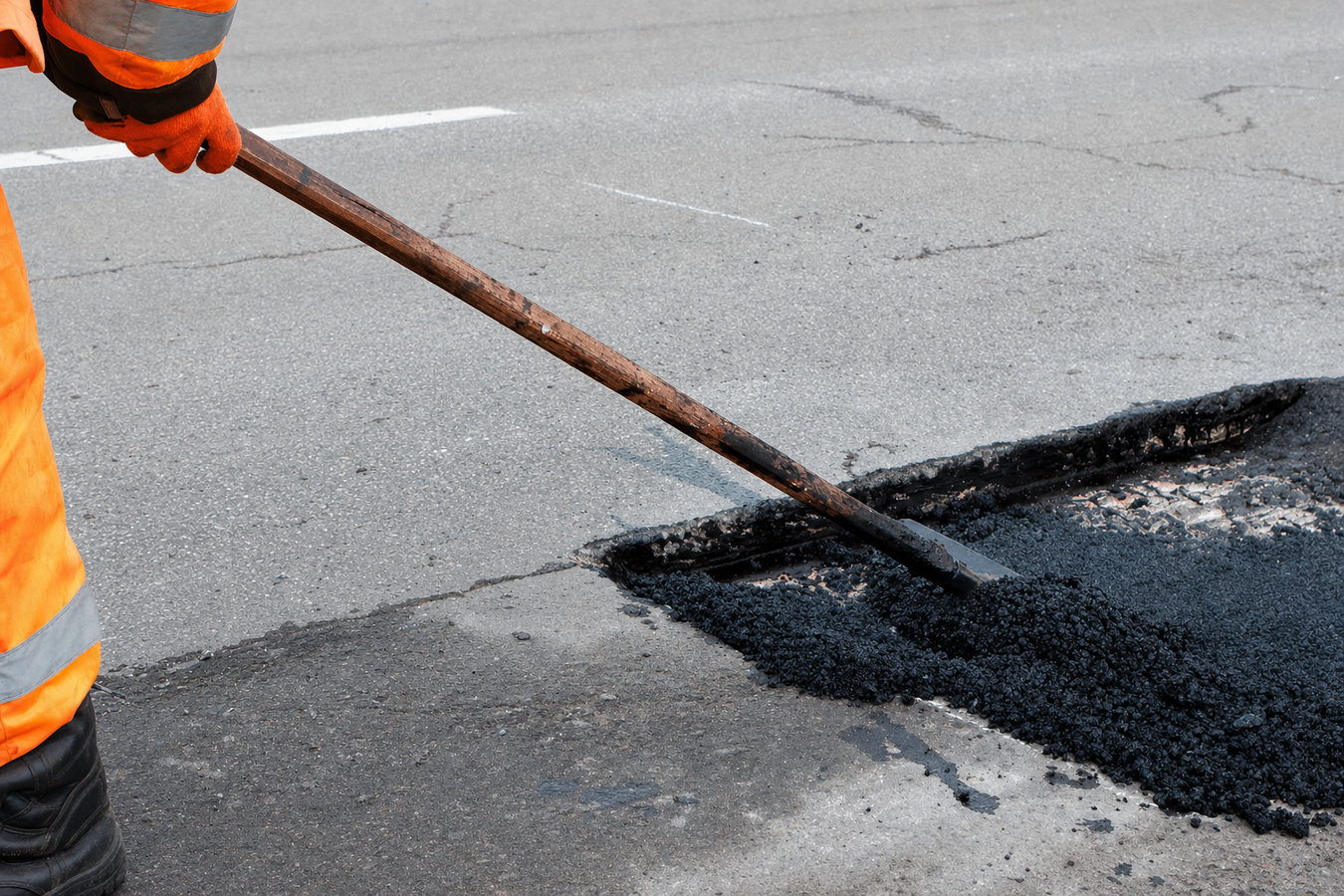
A crack or pothole that looks small today doubles in size after one monsoon season. We repair asphalt driveways and lots in Buckeye by addressing the base - not just patching the surface - so the fix holds.
Asphalt repair in Buckeye means cutting out or cleaning up the damaged section, preparing the edges, compacting the base if needed, and applying fresh material that bonds to the surrounding surface - most residential repairs are completed in a single day, sometimes in just a few hours.
The part most homeowners do not see is what happens before the new material goes down. In Buckeye, where desert soils shift and swell with monsoon rain and then contract as they dry, the base beneath your driveway can erode or move even when the surface looks fine. A patch applied over a compromised base fails again within a season or two. That is why we assess the base layer first - and rebuild it if needed - before any new asphalt is placed.
For surface-level cracking that has not yet reached the base, pairing a repair with asphalt crack sealing is often the most cost-effective path. It closes the gaps, stops water from getting in, and extends the life of the repair significantly.
Hairline cracks are normal in aging asphalt, but when cracks are growing, branching, or wide enough to fit a finger into, they need attention. In Buckeye, the combination of intense heat and monsoon moisture means cracks that go unrepaired grow quickly from season to season - what looks manageable in spring can be a significant repair by fall.
A pothole or a section that feels soft underfoot is a sign the base beneath the asphalt has been compromised. This is especially common after monsoon seasons, when water works its way under the surface and erodes the material below. Potholes do not fix themselves - they grow larger with every vehicle that passes over them.
A pattern of interconnected cracks that looks like alligator skin means that section has reached the end of its useful life. This type of cracking usually signals a base failure beneath the surface, not just surface wear. Catching it before it spreads to the rest of the driveway saves money and prevents a much larger repair bill.
Standing water on your driveway after a summer storm means the surface has settled unevenly or the drainage was never correct to begin with. Water that sits on asphalt - or finds its way into existing cracks - accelerates damage significantly. Addressing the drainage issue as part of the repair protects the work and helps it last.
We handle repairs across the full range of damage types - from surface cracks and isolated potholes to larger sunken sections where the base has failed. Every job starts with an honest assessment: we will tell you whether a repair is the right call or whether your driveway has reached the point where crack sealing and a patch are enough, or whether more extensive work makes better economic sense. We do not push the more expensive option unless it is genuinely the right one.
For damage that is widespread but not deep enough to require full replacement, we also offer pothole repair as a standalone service. After any repair is complete and fully cured, we recommend sealcoating the entire surface to protect both the new patch and the surrounding asphalt from Buckeye's UV exposure and heat.
For driveways with growing surface cracks that have not yet caused base damage - the most cost-effective way to extend the life of an otherwise solid surface.
For localized failures where the base has eroded or shifted - requires cutting out the damaged area, rebuilding the base, and paving flush with the surrounding surface.
For sections that have reached structural failure - we remove and replace just the failing area rather than the whole driveway, where the rest of the surface is still viable.
For driveways where water pooling is accelerating damage - we address the slope and grading issue at the same time as the surface repair so the problem does not return.
Buckeye's desert climate creates damage patterns that are different from most of the country. Extreme UV exposure oxidizes the asphalt binder year-round, turning driveways gray and brittle faster than homeowners expect. When cracks open up, Buckeye's summer monsoon storms push water into them quickly - the same storm that causes flooding on flat desert lots can saturate the base beneath your driveway in a matter of hours. Once the base is wet and the soil shifts, a surface patch alone will not hold. Repairs here need to account for what is happening below the surface, not just what is visible on top.
We serve the full West Valley and work regularly in Surprise and Tolleson, where soil conditions and monsoon drainage patterns are similar to what we see in Buckeye. If your HOA has rules about contractor hours or approval requirements before exterior work begins, we will ask about that upfront and make sure the job is scheduled and permitted correctly before we start.
Call or send us a message describing the damage - cracks, potholes, soft spots, or general wear. We respond within one business day and will schedule a time to come out and assess the job in person.
We walk the driveway and check not just the visible damage but the condition of the base beneath it. In Buckeye, soil movement and monsoon drainage can affect the base even when the surface looks relatively intact. We explain what we find and what the repair will involve before quoting.
The crew cuts out or cleans up the damaged area, stabilizes or rebuilds the base if needed, and then applies and compacts the new asphalt flush with the surrounding surface. Most residential repairs are done in a few hours; larger jobs may run a full day.
We tell you exactly when to drive on the repaired section - at least 24 hours, longer during Buckeye's hottest months. Once the repair has fully cured, we will recommend a sealcoating schedule to protect the new and existing asphalt from UV damage and heat.
Free on-site estimate. Honest assessment. Written quote with no surprises.
(480) 791-2560The most common reason repairs fail in Buckeye is that the base beneath the patch was never addressed. We check the base layer on every job and rebuild it where needed. A repair that starts from a solid foundation lasts for years - one applied over a failed base lasts a season.
Arizona requires paving contractors to hold a current state license through the Arizona Registrar of Contractors. Our license is verifiable online before you sign anything. This protects you from unlicensed contractors who disappear if a repair fails.
Expansive desert soils and monsoon drainage are not abstract concerns here - they are the reason many driveways in the West Valley fail prematurely. Our crews have worked in Buckeye long enough to know what the ground does after a summer storm, and we factor that into every repair assessment.
We follow the guidance from the National Asphalt Pavement Association on when repair is the right answer versus when replacement is more cost-effective. We will tell you plainly which one applies to your situation - and why - without steering you toward the more expensive option.
Every repair we do is backed by a written estimate that spells out the scope, the approach, and the expected outcome. When the work is complete, we walk you through what was done and give you a realistic picture of what to expect going forward - including when to plan for sealcoating.
Seal surface cracks before water and heat turn them into potholes and base failures.
Learn MoreRemove and replace individual pothole sections with fresh material compacted to the surrounding grade.
Learn MoreCracks and potholes worsen through every monsoon season - call today for a free estimate and same-season scheduling.