Loading...
Serving Buckeye, AZ and surrounding areas. (480) 791-2560
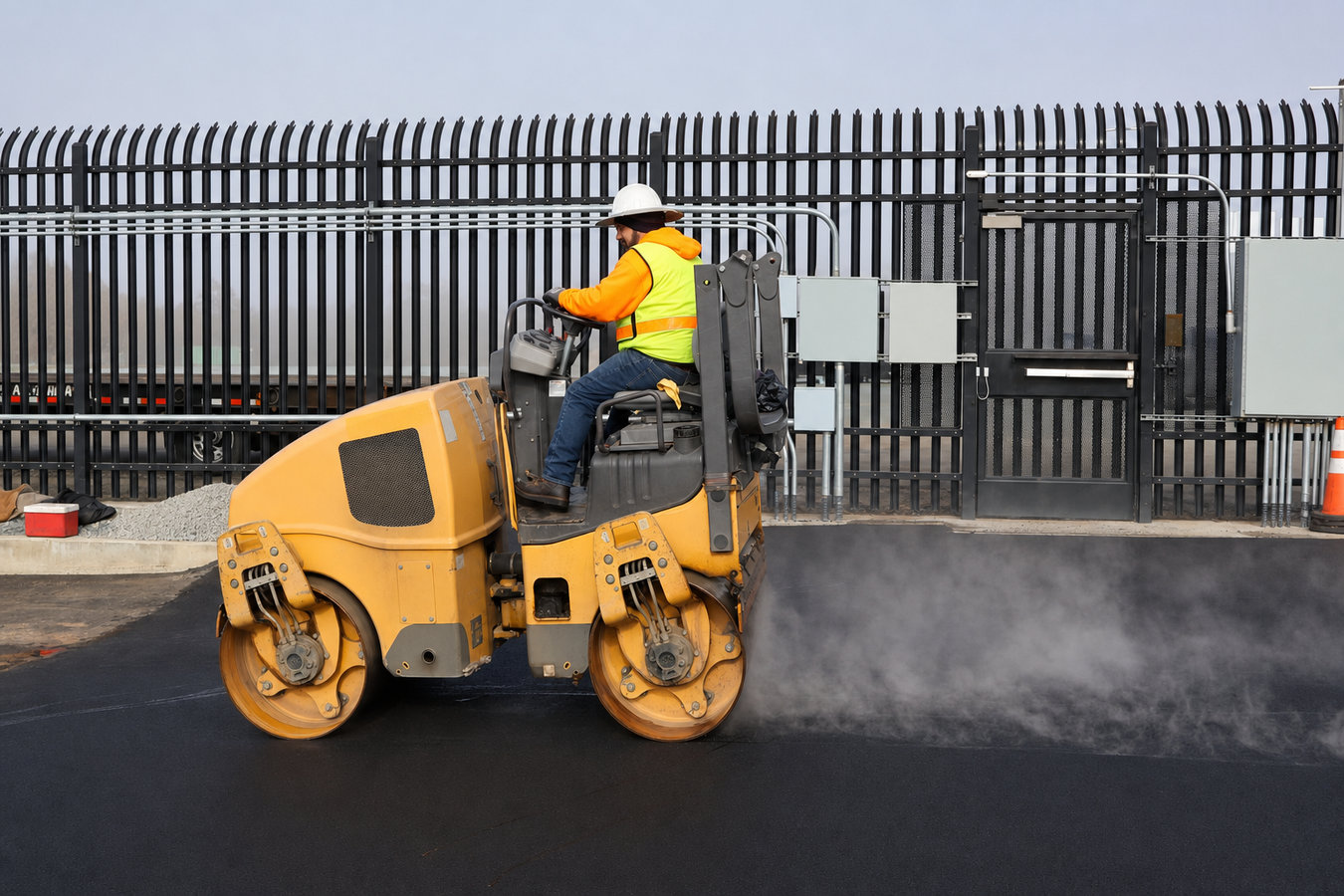
Buckeye Asphalt Paving brings commercial asphalt paving, driveway installation, parking lot repair, and sealcoating to Phoenix properties. We have served the West Valley and greater Phoenix area since 2015 and reply to every inquiry within one business day.
Phoenix has a massive inventory of strip malls, office parks, and commercial buildings along arterials like Camelback Road, McDowell Road, and the I-10 and I-17 corridors - all needing parking lots that can survive sustained temperatures above 110 degrees. Our commercial asphalt paving service uses high-temperature mix designs engineered specifically for the Sonoran Desert, covering everything from base prep to striping.
Many Phoenix homes built in the 1980s and 1990s boom years now have driveways that are approaching or past their service life in this climate, with oxidized surfaces that crack and crumble despite regular care. A new asphalt driveway installed to the right base depth for Phoenix soil conditions gives homeowners a smooth, heat-resistant surface that lasts decades with basic maintenance.
Phoenix receives over 300 sunny days a year, and UV radiation is the single fastest driver of asphalt oxidation in this climate. Regular sealcoating replenishes the surface oils that UV strips away, keeping pavement flexible and resistant to the cracking that monsoon water exploits to work under the surface and damage the base.
Phoenix commercial properties along high-traffic corridors face constant wear from heavy vehicle loads on heat-softened pavement, and deferred maintenance turns minor surface issues into base failures that cost four times as much to fix. A regular maintenance program covering crack sealing, sealcoating, and pothole patching keeps lots functional and presentable without the cost of full replacement.
In Phoenix, cracks in asphalt are not just cosmetic - they are the entry point for monsoon water that softens the base material and accelerates the collapse of the entire surface. Sealing cracks before the July monsoon season arrives is the single highest-leverage maintenance step for any property owner in this climate.
Phoenix potholes form when monsoon water enters asphalt cracks, softens the base material, and then evaporates - leaving a void that collapses under vehicle weight. We use hot-mix asphalt for all pothole repairs because it bonds to the surrounding material properly and does not pop out after a few heat cycles the way cold-patch products do.
Phoenix is one of the hottest major cities on earth, and that fact shapes every asphalt paving decision here. Summer daytime highs regularly exceed 110 degrees Fahrenheit, which softens asphalt binders and causes pavement to rut under heavy vehicle loads if the mix design is not matched to desert temperatures. UV radiation at this latitude is relentless year-round, oxidizing unprotected asphalt surfaces and turning them grey, brittle, and prone to cracking faster than property owners in cooler states would expect. Then the monsoon season arrives every July, and months of baking-dry pavement suddenly receives concentrated rainfall - water finds every crack and works down to the base, accelerating the damage that heat started. A contractor unfamiliar with this sequence of stress events will spec the wrong materials, skip critical prep steps, or schedule work during the worst possible heat windows.
The scale of Phoenix adds another layer of complexity. Covering over 500 square miles, the city contains an enormous range of property types - from 1940s and 1950s residential neighborhoods near downtown and Encanto to sprawling commercial corridors along I-10, to the massive master-planned communities in North Phoenix and Ahwatukee. Each of these areas has different base soil conditions, drainage patterns, and traffic loads. The caliche layer that underlies much of the Phoenix metro is a hard, calcium-rich pan just below the surface that affects excavation depth, drainage behavior, and the time it takes to prep a site properly. Contractors who have not dug into Phoenix soil - or who are importing methods from other regions - will consistently underestimate what the desert demands of a pavement job.
Our crew works throughout Phoenix regularly, and we understand the local conditions that affect asphalt paving work here. We are familiar with the City of Phoenix Planning and Development Department permit process and coordinate with city staff when projects involve drainage changes or curb modifications that require approval. We also schedule Phoenix jobs for early morning start times from June through September, because asphalt application above 100 degrees air temperature creates adhesion problems that show up months later - a detail that contractors from out of the region consistently miss.
Phoenix is a city of distinct neighborhoods, and we know them well. Older central areas like the Willo Historic District and Encanto tend to have aging concrete and asphalt surfaces that may require base evaluation before any new layer goes down, while newer areas in North Phoenix and Ahwatukee are more likely to need sealcoating and crack repair to extend surfaces that are still in reasonably good condition. The wide grid of arterial roads - including Interstate 10, Interstate 17, Camelback Road, and McDowell Road - are the routes our crew travels most often across the city. We also serve properties near Camelback Mountain in central Phoenix and in the South Mountain neighborhood, where lots tend to be larger and driveways cover more ground than in denser areas.
We also serve neighboring Glendale, AZ to the northwest, where soil conditions and housing profiles are similar to the older parts of Phoenix. Property owners on either side of the Glendale-Phoenix boundary will get the same crew, the same materials, and the same process.
Reach us at (480) 791-2560 or submit the online estimate form. We respond to every Phoenix inquiry within one business day, including evenings and weekends, and can usually schedule an on-site visit within the same week.
We visit your Phoenix property to assess the surface condition, probe for base problems, and check drainage. You receive a written estimate covering all costs before any work is scheduled - no surprise charges and no pressure to decide on the spot.
For summer jobs we start early in the morning to complete asphalt work before peak afternoon heat. The crew handles all surface prep, material delivery, application, and cleanup - you do not need to be present throughout, though we ask that vehicles be kept off the surface for 24 to 48 hours after work is done.
Before we leave the Phoenix property, we walk the finished surface with you or your property manager, confirm everything is complete, and leave written care instructions. For commercial jobs we also provide a maintenance schedule recommendation for sealcoating and crack inspection intervals.
We serve all of Phoenix - from central neighborhoods near downtown to North Phoenix and Ahwatukee. No obligation, written estimate, reply within one business day.
(480) 791-2560Phoenix is the capital of Arizona and one of the largest cities in the United States by both population and land area, covering more than 500 square miles across the Sonoran Desert floor. The city is home to well over 1.5 million residents and forms the core of a metro area that stretches across the Valley of the Sun, encompassing Scottsdale, Tempe, Mesa, and the western cities including Glendale and Avondale. Phoenix grew rapidly after World War II and through successive booms in the 1980s, 1990s, and 2000s, producing a housing stock that ranges from 1940s bungalows and midcentury block-construction homes near downtown and Encanto to expansive master-planned communities in North Phoenix, Deer Valley, and Ahwatukee. You can learn more about the city at the Phoenix Wikipedia article.
The commercial landscape of Phoenix is defined by its wide arterial grid, with retail, industrial, and office development concentrated along major corridors including Camelback Road, McDowell Road, Thomas Road, and the freeway frontage roads along I-10 and I-17. South Mountain Park and Preserve, one of the largest municipal parks in the country, anchors the south side of the city, while Camelback Mountain rises sharply from the center of the metro as the most recognized geographic landmark in Phoenix. Adjacent cities including Tolleson, AZ to the west and Avondale, AZ along the I-10 corridor share similar soil conditions and housing ages with the western edges of Phoenix, and we serve all of them with the same crew and equipment.
Protect your pavement and extend its life with professional sealcoating.
Learn MoreKeep your parking lot safe and compliant with crisp, clear striping.
Learn MoreNew asphalt surfaces installed right the first time, built to last.
Learn MoreFull parking lot paving for commercial and residential properties.
Learn MoreSmooth, durable driveway paving that adds curb appeal and value.
Learn MoreFast, lasting repairs that stop damage before it spreads further.
Learn MoreSeal cracks early to prevent costly water damage and deterioration.
Learn MoreLarge-scale commercial paving projects completed on time and on budget.
Learn MoreOngoing maintenance plans that protect your parking lot investment.
Learn MoreResurface worn pavement to restore appearance and structural integrity.
Learn MoreQuick pothole repairs that eliminate hazards and prevent liability.
Learn MorePrecise grading and excavation to prepare any site for paving.
Learn MoreQuality concrete curbs and sidewalks that define and protect your property.
Learn MoreEfficient milling removes old asphalt to prepare for a fresh surface.
Learn MoreProper drainage systems that protect pavement from water damage.
Learn MoreCustom speed bump installation to improve safety on your property.
Learn MoreCall today or request a free estimate online. Phoenix jobs fill up fast in spring - reach out now to get on the schedule before the summer heat arrives.